What is Professorial Care for Students in the Classroom?
In the introduction of his book Heidegger's Contribution to Psychotherapy (Groth Trans., 2022), Gion Condrau describes two types of care that one person can show another. The first is a managerial care, which is caring for a person the way you might take care of, say, a beloved new car. The second is a professional concern, which is caring for the human person and not some manageable aspect of them.
I have long been interested in the relationship between therapy and teaching. More specifically, I am curious to know what teachers can learn from therapists. This passage by Condrau got me thinking about what professorial care might look like in its managerial and nurturing forms.
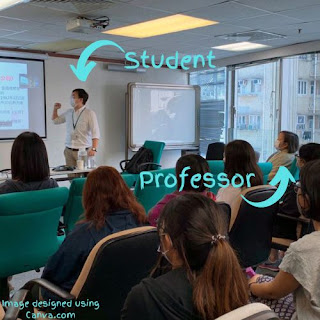
Managed care in the classroom is, for me, like organizing a course around a specific learning objective. "By the end of the next six weeks, you will improve your ability to evaluate research design." Then I get to work building that skill in my students. From my perspective, this is structured and purposeful, and I feel in control and comfortable there. It is teaching as I have described it in Autonomy Supportive Teaching in Higher Education. In this way of being a professor, I am an education technician who applies teaching skills to students for the purposes of instrumenting a change in them. I understand the downside here is that managed care substitutes some cognitive skill for the whole person. I'm not meeting them, per se, I'm meeting their ability to reason in a particular way. I look past my students as persons and see them instead as a sort of cart full of intellectual skills.
The upside to managed care is a clear and structured course that ties into program learning objectives. The downside, however, is that no matter how well students seem to do in their courses, they are almost never prepared for what comes next? That is, struggle to meaningfully apply what they've learned beyond the course itself.
Nurturing care in the classroom is more like meeting students and together deciding how to spend time. Students participate in determining the learning objectives, course activities, evaluations, and so on. Teacher and student find themselves on a near-level playing field, and the persons themselves take center stage. Intellectual skills are only important insofar as they supplement or enhance students' perceptions of freedom in their careers and lives. It is teaching as I have described it in Nondirective Teaching. Students feel a huge sense of relief in this sort of classroom, but I can't help feeling like it's a huge waste of time. I'm insecure, because I'm not the one who is pulling the strings. This is your Carl Rogers-esque compassionate uncle. Learning objectives are constantly under revision, and students are free to treat the course however they wish.
The upside to nurturing care is that students feel seen and heard, and they have the opportunity to explore areas of their discipline/career/interest that they didn't have a chance to explore in their more regimented classes. Class time also doubles as a sort of therapeutic hour, where students share their concerns and fears and listen sympathetically to one another. The downside is the lack of apparent direction. To be fair, life often seems to lack direction until we impose some onto it.
In both classrooms, only a minority of students (50% or less) seem to get anything out of it. In the managed care classroom, the disengaged students wind up cheating, failing, and/or skipping. In the nurturing care classroom, the disengaged students skip.
How Managed Care and Nurturing Care Are Playing Out
I'm currently teaching two classes face-to-face. One is managed, the other open and free. (My two online courses are managed care.) I've begged my open and free students for some direction so that I might feel useful, and they've given it. Consensus in the free course is that it's their favorite. The managed care f2f course has about 50% participation, and about 25% are sincerely engaged and learning. I've helped them design projects and I see in them a change in outlook and ability.
I'm not particularly happy with either class. Only, in the managed care group I feel like I've done my best. In the nurturing care group I feel like I'm giving them less than I am able.

Comments
Post a Comment