AI Detection Sleuthing and Me
I know AI usage has been a problem for a few years now. A problem in that some students (and some faculty and staff) will outsource their thinking and writing to AI programs instead of learning to do these things themselves. But I’ve been keeping my head under a blanket, where I read physical books with yellowing pages by flashlight.
This past semester I asked students to complete four research projects using four different methods in psychology. They got three weeks to work on each study, so I wasn’t expecting polished reports or anything like that. The idea was to play around with each method for long enough that students started to get the hang of it, then move on to another method.
Since my head was still beneath our lightweight Summer comforter and sheets, it didn’t occur to me that a student could ask Chat or CoPilot something like, “Conduct a study on generational trauma using critical psychology.”
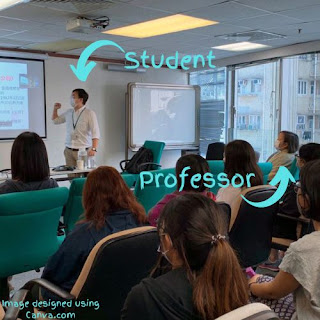
Students elected to give presentations on their studies rather than write papers. That worked nicely for me, because it meant that I could use class-time for assessing their projects. Students created artful powerpoint presentations and presented their work in weeklong conferences. One or two presentations would leave me wondering if students actually did the work they were describing. Mostly when they were using psychological concepts incorrectly or out of context. You know, the kinds of mistakes that are made by—
Nope, I wasn’t ready to have that thought.
Eventually, just showing up to class for their presentations was too much for some students to handle. I started getting PDFs of presentations along with notes about how they were too sick to come to class, and would I accept this manuscript instead?
I had to uncover my head to read the papers, and when I did so I became physically ill. The papers appeared to have been written by a soft-serve ice-cream machine.

Photo credit: ME
I reached out to a professor in the English department who for her AI-prevention checklist. I received a dissertation prospectus in AI-detection and documentation procedures. I began dissecting one of the more well-written papers. To save myself time, I let the student know what I was doing, and what I planned on doing once I finished in the event that I determined that the paper was a fabrication. Within minutes the student responded and admitted they cheated, which meant I didn’t have to go line-by-line comparing the syntax and word choice of the student’s paper to something I asked Co-Pilot to write for me on the same topic.
The student and I negotiated a deal that meant they could receive up to half of the points they lost, and I felt like I had fulfilled my duties and obligations as professor.
But the whole process made me feel miserable. I spent a total of one hour ruminating over the student who had cheated—applying my skills and insights to something written by a program. Meanwhile, there were at least a few students (I hope) who had done the work themselves, and I had only spent maybe 15-minutes reviewing, assessing, and giving feedback to each of them. That means I spent four-times longer on the cheat than I did on the students who were following directions. If I factor in the amount of time I’ve spent since then, complaining to my wife for example, then the factor is more like 10x.
Here is the problem of AI-detection sleuthing as I see it. It has two parts:
1. Catching AI cheats means that I spend significantly more time on suspicious work than I do on the students who are actually practicing the skills I’m teaching them.
2. Thinking about, policing, and designing activities to minimize AI-usage makes me feel awful—approximately like I would feel the day after drinking an entire bottle of red wine.
And even typing that out in my characteristic obsessive-compulsive personality disorder numbered list is making me nauseous, because that is what AI would do: it would make a numbered list, followed by sections describing each number.
And so, here is what I endeavor to do—and my thinking will probably change again before too long; I’ll cycle back and forth as my guilt and experience compel me (and I am now resisting the use of bullets): I’ll create personal essay describing what happens when students outsource their thinking to AI. Then I’ll evaluate everything as if it has been written by students. I will probably comment if something seems overly soft-serve-esque, but not because I’m challenging that they’ve written it. But because writing should have a perspective. It should come from somewhere.
The article offers an honest reflection on how AI is changing academic teaching and assessment. The author's experience shows how quickly educators can encounter questions about whether students are independently developing their research and writing skills or relying on AI systems to do the intellectual work for them. The shift from written reports to presentations also created an opportunity for the instructor to observe students' understanding more directly.
ReplyDeleteThe discussion raises an important question about how AI tools can be used in educational settings without replacing genuine learning. Students may increasingly encounter systems capable of producing research ideas, explanations, and written material, making it important to understand both their capabilities and limitations. This makes Claude Certified Developer Training a relevant area for understanding modern AI-assisted workflows.
The examples of students presenting psychological studies also highlight why educators need to pay attention to the quality and context of students' work. Incorrect use of psychological concepts can raise questions about whether the student truly understands the material or has relied too heavily on generated responses. Exploring tools such as ChatGPT Developer Training can help provide broader awareness of how conversational AI systems are used in development and content-generation contexts.
ReplyDeleteThe article ultimately points toward a broader challenge for education: finding assessment methods that encourage students to think, investigate, and communicate their own understanding while recognizing the growing presence of generative AI. The combination of student research, presentations, critical evaluation, and AI awareness provides useful context for Generative AI Projects for Final Year.
ReplyDelete