Guidelines and Tips for Being a Student Co-researcher
Thank you for your interest in joining my research team (or perhaps someone else's research team). I’ve benefited from students like you in the past who have contributed to article publications, book chapters, and conference presentations. And they got to graduate with publications on their resume! I’ve had many more students, however, who were unhelpful or who became a hindrance to the process. To help me and you avoid the latter, I have some guidelines, tips, and expectations for working as a co-researcher.
Be prepared to work on the project for a few hours each week and spread those hours out. Often times the breakthroughs come about in-between the time we spend working on a project. So check in with the research problem, readings, data, and so on with regularity. Even being intentional about spending 30 minutes here and there each week can yield substantial productivity.
Be proactive. My most helpful co-researchers practice discretion in making decisions about the project. Instead of, “Should I create a new section titled ‘How This Relates to the Holocaust’?” they go ahead and write the section and then share it with me. My least helpful co-researchers check in with me every five minutes to see if what they’re doing is okay (or to ask what they should be doing again). My absolute least helpful co-researchers do nothing until they are given some concrete instructions for doing something.
Be prepared to do work that won’t seem to go anywhere, and don’t think of that as time wasted. I spend more time reading and writing things that I will never use than I spend on things I will use. This is what leads to exceptional scholarship. Think about it: if you create 100 things and get to pick the best 10, then your product will be fantastically better than if you only created 10 things to begin with and had to keep all 10.
If you are helping with writing (such as the literature review), then...
- Absolutely no AI writing or AI-generated references. I would be humiliated professionally if a manuscript with my name on it had something written by a program or had a fake citation. It makes me queasy just writing about it.
- Be economical and concise. Journal article authors aren’t trying to prove that they did the reading. Do the reading, but then summarize or reference as briefly as possible. You don’t need a paragraph of description for each reference. Look at this article. I have 23 citations in the first two paragraphs.
- Read widely, especially when learning about the topic. Find 10-20 articles. Follow the trail provided by one good article (see which articles it references). Learn about the topic inside and out, its nuances, its unanswered questions. Become an expert. Then write about it as an expert. If you’re unsure of your understanding, then write tentatively.
- Ethically, for me to include your name in the article byline, I have to think you made a material contribution to the project. This contribution can be intellectual (such as an idea for how to organize the design or an insight about the phenomenon being studied) or old-fashioned time spent laboring on something we use, such as the analysis, a few paragraphs for the lit review, or interview transcriptions.
Typical Timeline from Beginning to End for a Research Article:
1. Reading about a topic: 1-6 months
2. Writing Literature Review: 1 month
3. Preparing and submitting IRB: 1 week, 1-2months wait on IRB
4. Data collection: 1-3 months
5. Data analysis: 1-3 months
6. Completing manuscript: 1-3 months
7. Revising and publishing manuscript: 3-18 months
Resources for learning how to write with style:
· Strunk and White, Elements of Style
· William Zinsser, On Writing Well
· Kurt Vonnegut, Pity the Reader
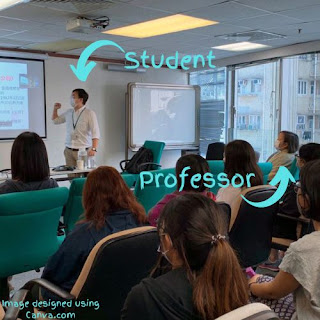
Being a student co-researcher is an opportunity to actively participate in the research process while developing valuable academic and professional skills. A successful student co-researcher should approach the work with curiosity, responsibility, and a willingness to learn. Understanding the research goals, communicating clearly with the research team, respecting ethical guidelines, and maintaining accurate records are essential parts of contributing effectively to a project. Students should also ask questions, seek feedback, and remain open to new ideas throughout the research journey.
ReplyDeleteTo succeed as a student co-researcher, it is important to develop strong organizational, analytical, and teamwork skills.IEEE Projects for CSE. Managing time effectively, reviewing relevant literature, documenting observations carefully, and sharing insights with the research team can strengthen the quality of the work. Most importantly, students should view research as a collaborative learning experience that builds confidence, critical thinking, and a deeper understanding of how knowledge is created and shared.
ReplyDeleteThis comment has been removed by the author.
ReplyDeleteThe article gives practical and valuable guidance for students taking part in research as co-researchers. I particularly liked the emphasis on consistent weekly effort, proactive decision-making, and being willing to explore ideas that may not immediately produce usable results. The point that productive research often involves creating and discarding work is an important lesson for students developing their research skills.
ReplyDeleteThe emphasis on regular engagement with research problems, readings, and data is especially useful for students working toward academic publications. Developing the ability to contribute independently while maintaining communication with a research supervisor can make collaborative research more productive. These practices are closely connected with Research Paper Writing Services.
The article also highlights that research requires patience and a willingness to experiment. Producing multiple ideas, sections, analyses, or drafts before identifying the strongest material can improve the quality of the final work. This mindset is particularly valuable when students are developing substantial academic documents and preparing their findings for Thesis Writing Services.
The discussion is also relevant to understanding responsible use of AI tools in academic workflows. Rather than treating AI-generated material as a substitute for scholarly writing, researchers need to recognize the risks associated with inaccurate or artificial references and maintain careful oversight of their work. This makes Claude Certified Developer Training and ChatGPT Developer Training relevant when learning how these AI systems relate to development and content-generation workflows.
ReplyDelete